Wat Fa Wiang Inn
Update 23 August 2023
Visitors 19714 Category Temples and Places
located
at Ban Lak Tang Moo 1 Piang Luang Subdistrict Wiang Haeng District Chiang Mai
Province is under the Maha Nikaya Sangha one of the two denominations of
Buddhism. There is a Tai Yai
architecture. In the previous era it was
the area of influence
of the Restoration Council of Shan State (RCSS) under the leadership of Khun Sa. After Khun Sa laid down arms against the Burmese
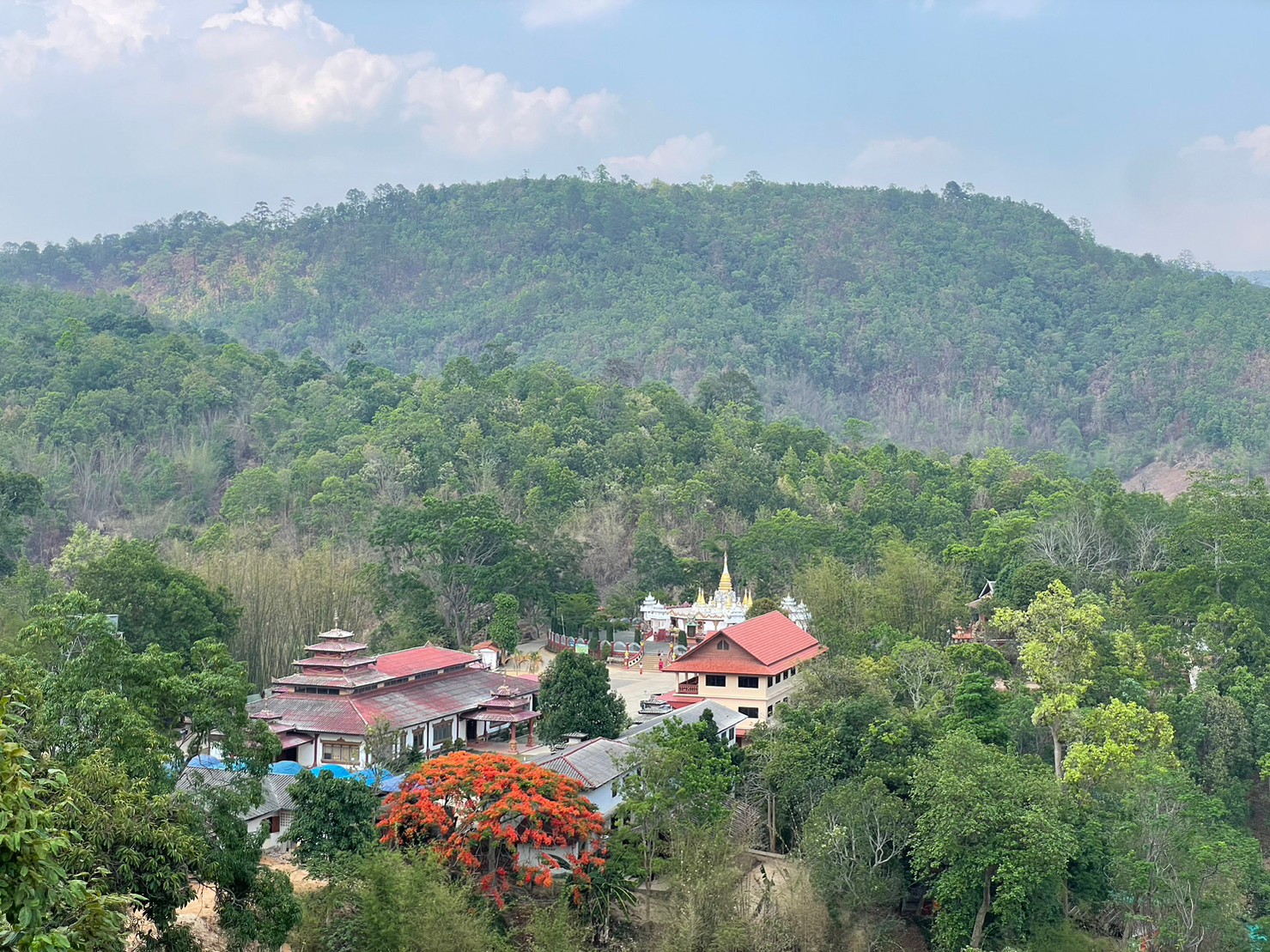
military government the temple area was split into two parts. A golden yellow pagoda is in Thailand while Tai
Yai temple with red roofs is in Myanmar
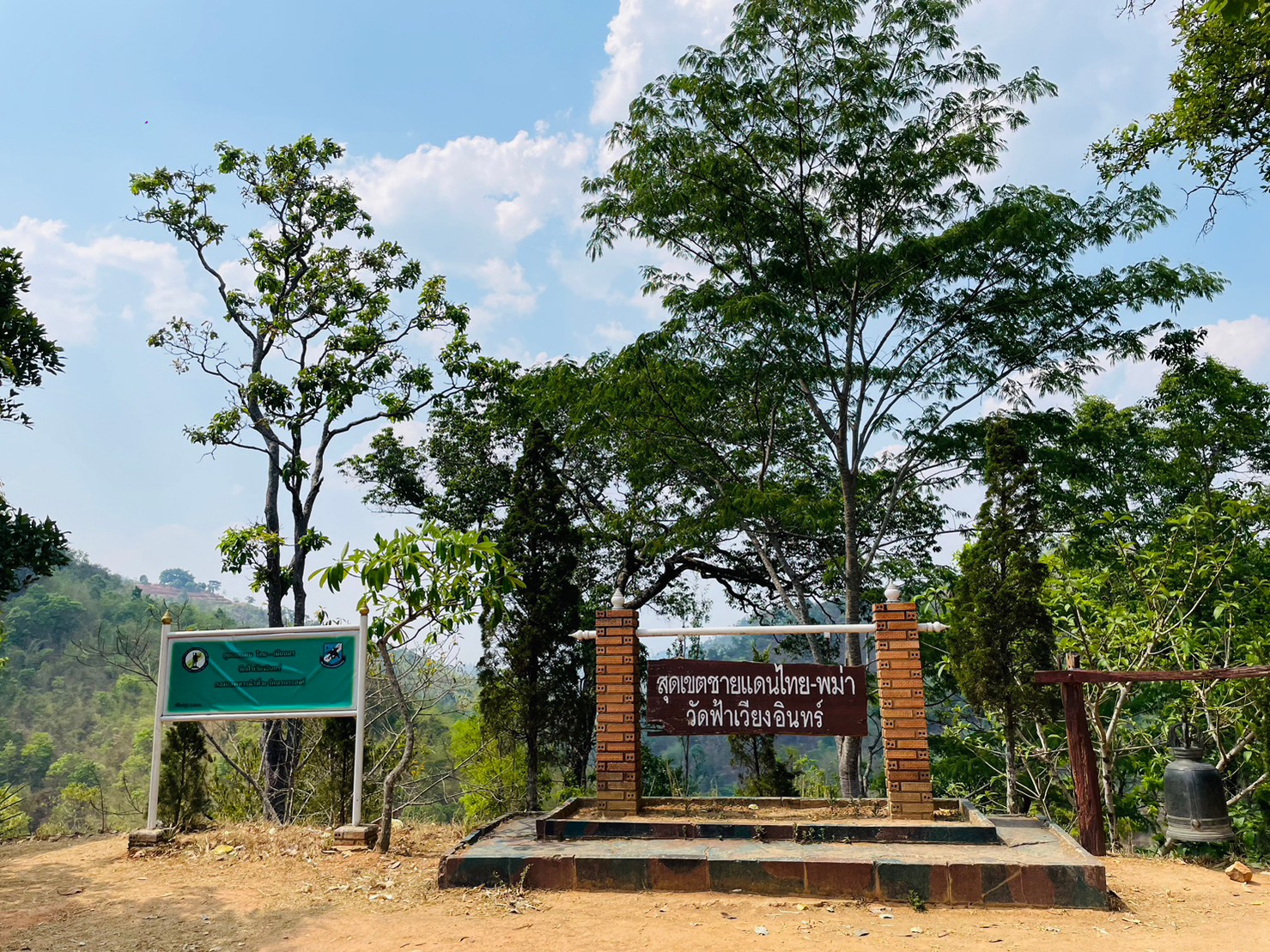
Wat Fa Wiang Inn is located both borders of Thailand and Myanmar. The territory straddles Thailand and Myanmar making this temple known as "Wat Song Phaen Din" or the temple on two nations. (Tourism Authority of Thailand n.d.) Therefore Wat Fa Wiang Inn is like a spiritual anchor of the people on both nations. Wat Fa Wiang Inn is in Ban Lak Thaeng in Thailand and it is adjacent to Ban Pang Kam Kor Pang Yang Subdistrict Mueang Tuon District Shan State Myanmar. Its area covers approximately 200 rai.
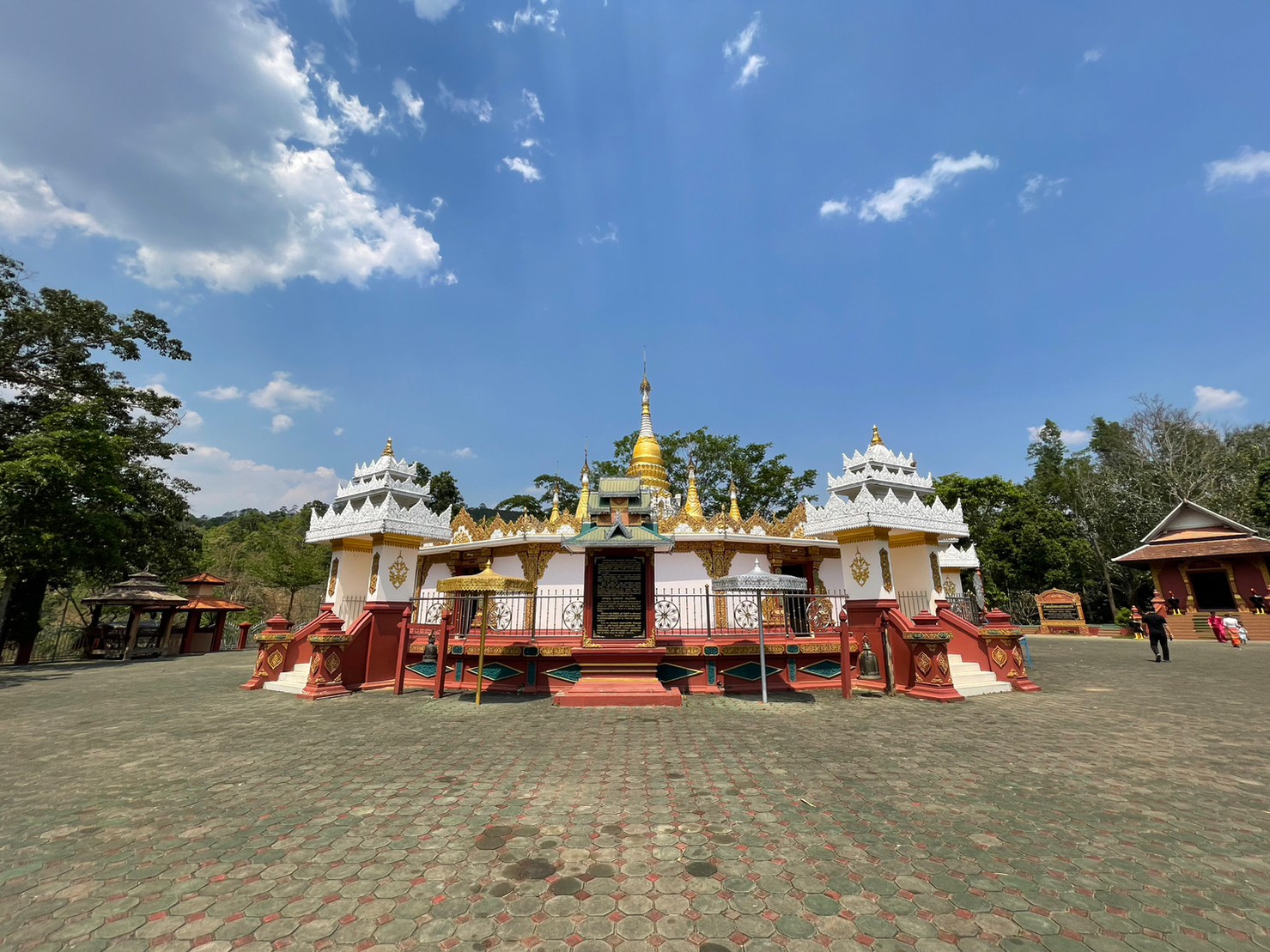
The northern boundary is adjacent to the ThaiMyanmar border. The south is adjacent to Ban Lak Thaeng. The east connects to Muang NgaiPiang Luang road and the west is adjacent to the mountains. An important building on the Thai side consists of an assembly hall (wiharn) that is kidneyshaped (Tai Yai) mixed with European style. It is onestory with a brick wall made of cement. The roof structure is made of wood raised in 2 layers with 5 tiered peaks and 3 tiered porches in all 4 directions. The principal Buddha image is in the posture of giving a sermon in Tai Yai style. A pavilion and a kitchen hall are on the Burmese side (Shan State). There is an important hall consisting of a Tai Yai ubosot with a 9tiered peak and a Phra Pariyattidhamma School. (At present the Burmese military used it as a base for setting up troops) a long pavilion with 20 rooms is used as a resting place for monks and novices. Besides Wat Fah Wiang Inn also has 15 monks is cloisters built along the ridge.
Wat
Fa Wiang Inn was built around 1968 along with the restoration of Marachina
Chedi or Kong Mu Lan Leun in Tai Yai language.
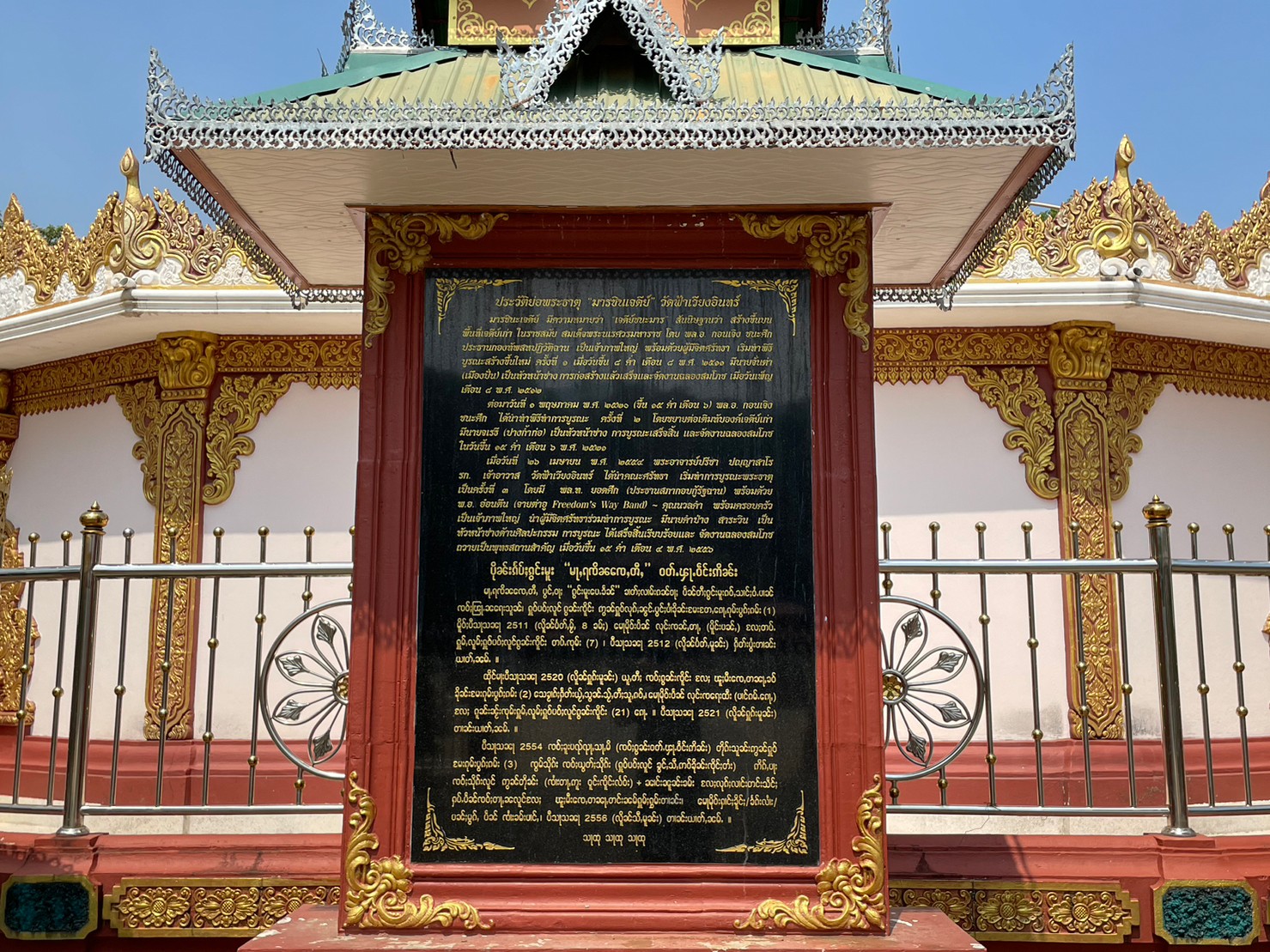
Kong Mu Lan Leun means the border relics. And there is an inscription of Phra That
Marachina Chedi in Shan language under the pagoda base talking about the
history of building the temple. (Tourism Authority of Thailand n.d.)
Chao
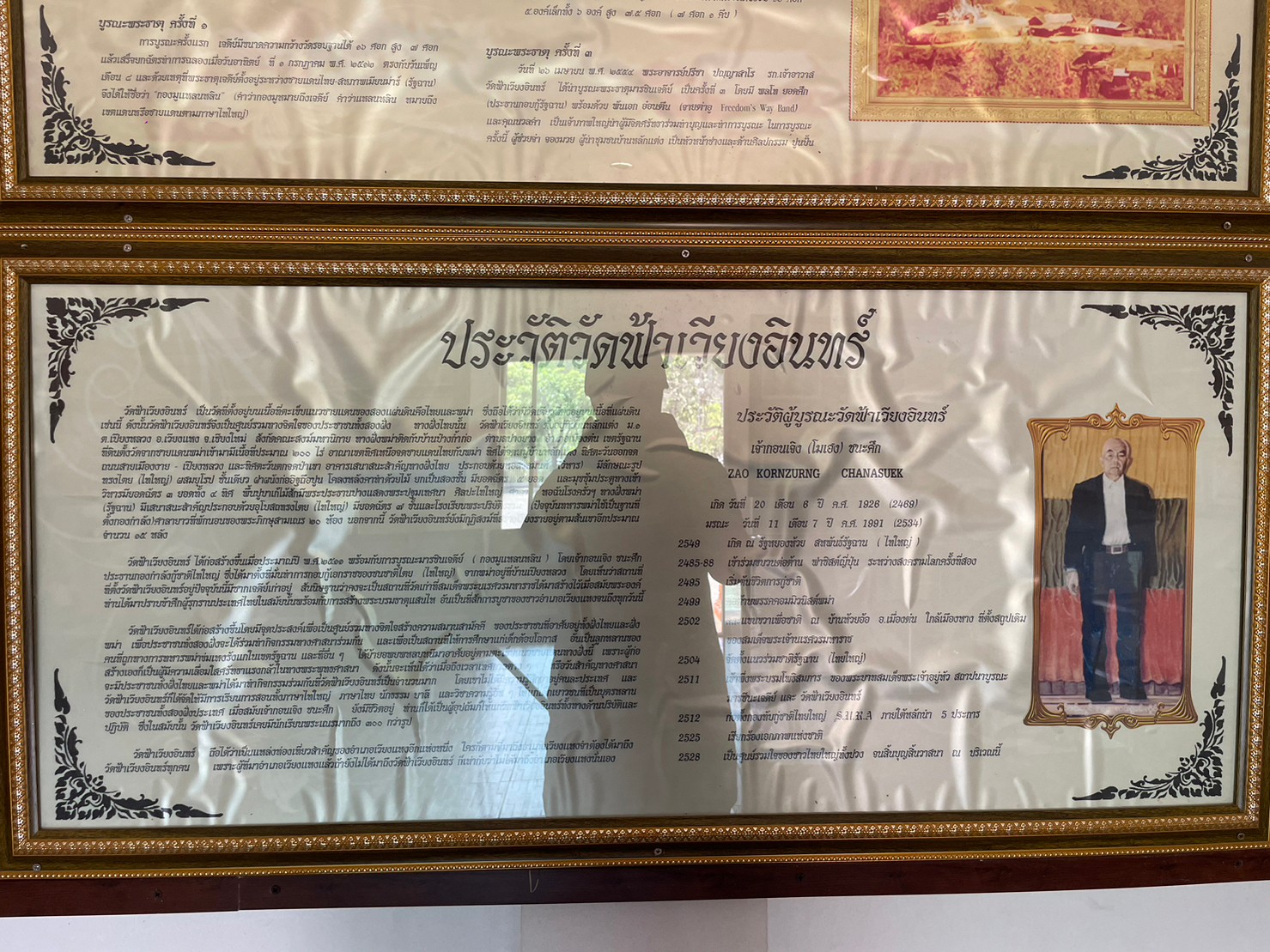
Goncheng Chanasuek
the former president of the Restoration Council of Shan State (RCSS) came to set up a base to restore the
independence of Tai Yai people in Ban Piang Luang. He saw an area where Wat Fa Wiang Inn was
located today had the remains of an old pagoda. It is assumed that the area is the place of
the old temple built by King Naresuan the Great when he came to suppress the
enemy who invaded Thailand at that time along with the creation of Phra That
Saen Hai which is continuously worshiped by the people of Wiang Haeng District
today
The purposes of building Wat
Fah Wiang Inn were to be a spiritual anchor for people unity in both Thai and
Burmese sides to do religious activities among different groups of people to
educate underprivileged children who are
descendants of people who have been persecuted by the Burmese military in Shan State and elsewhere and who fled to live along the border on this side because the builder himself was a person with strong faith in Buddhism.
Therefore in various festivals
and important religious days a large number of people from both Thai and
Burmese sides usually do activities at Wat Fa Wiang Inn without having the
feeling of being in different countries. And Wat Fah Wiang Inn has provided teaching
and learning including Tai Yai language Thai language Dharma Pali and other subjects for children and teenagers of people from both countries. Chao Goncheng Chanasuek was Wat Fa Wiang Inn patron both in terms of Buddhism teaching learning and practice.
Wat Fa Wiang Inn has an important Buddhist pagoda called "Marachina
Chedi" which means "pagoda of winning the devils". This is assumed that it was built on the site
of an old pagoda during the reign of King Naresuan the Great. Chao Goncheng Chanasuek or General Chao Goncheng Chanasuek the former president
of the Restoration Council of Shan State (RCSS) was a main host as well as other Buddhism believers. The restoration ceremony was
held on the 8th day of the 8th lunar month 1968. Mr.
Chanta (Mueang Pun) was a mechanic chief. The construction was completed
and the celebration was held on the full moon night of the 8th lunar month
1969.
Later on the 1st of May 1977 (the 15th day of the waxing moon of the 6th lunar month) Chao Goncheng Chanasuek or General Chao Goncheng Chanasuek set the second restoration ceremony by extending the old pagoda. Mr. Jaraetee (Pangkamko) is a mechanic chief. The restoration was completed and held a celebration on the 15th day of the waxing moon of the 6th month 1978.
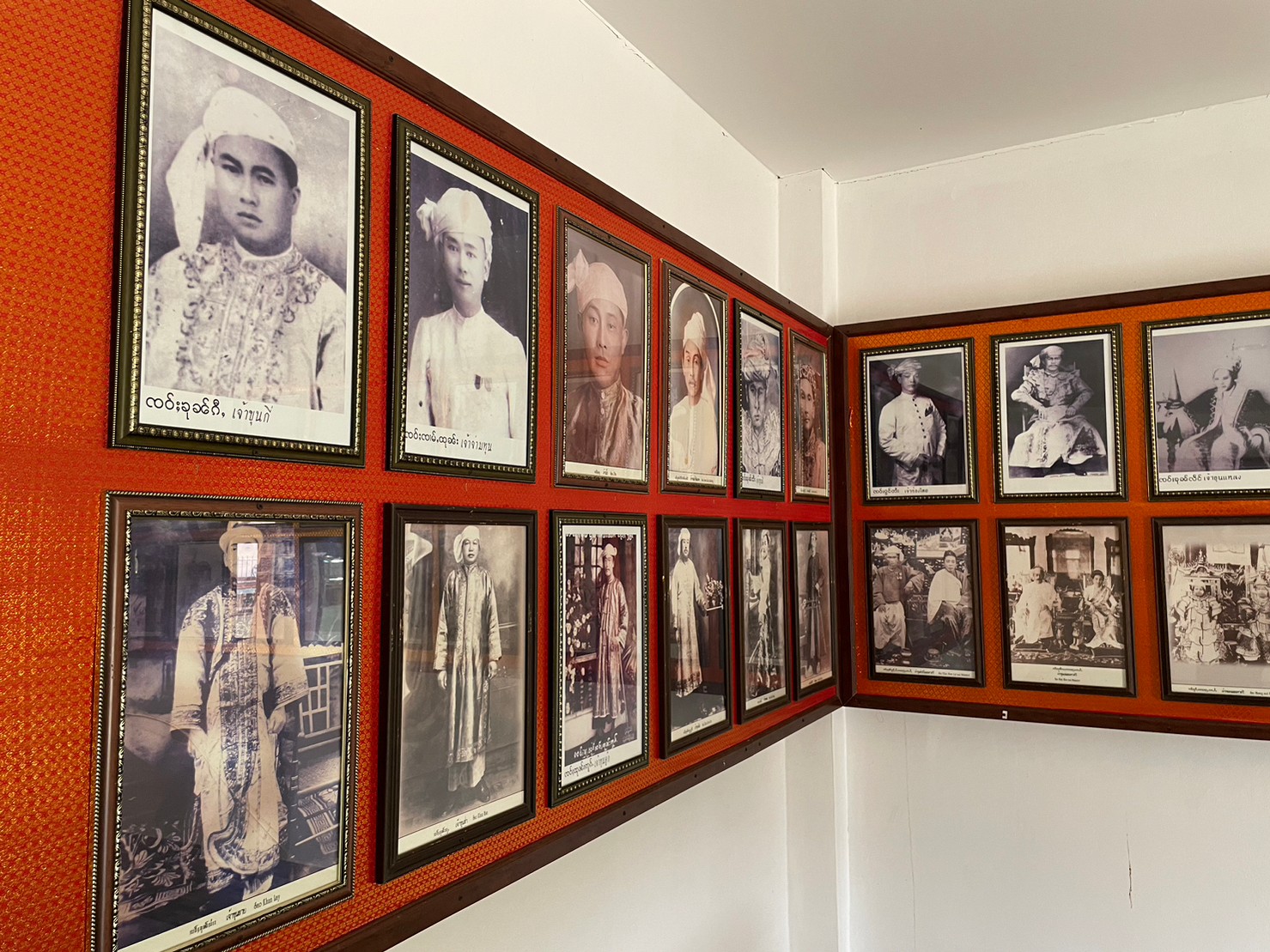
On April 26 2011 Phra Ajarn Preecha Panyasarok an abbot of Wat Fa Wiang and the believers restored the pagoda for the third time. Lieutenant General Yodsuek (Chairman of the Restoration Council of Shan State (RCSS)) Colonel OnTuen (Jai Ta U Freedomiss Way Band) Ms Nuankham and family were the main hosts. They and other Buddhism believers helped restore the pagoda. Mr. Kampang Sarawin was a mechanic chief in fine arts. The restoration was completed and celebrated on the 15th day of the waxing moon of the 4th lunar month in 2013. The entrance arch of the pagoda was not decorated with lions or naga statues but it was decorated with a long drum or Pu Je drum. Moreover there is a shrine of King Naresuan the Great in the temple. There is also a room showing pictures of leaders and history of Tai Yai people. Behind the temple there is the tomb of Chao Goncheng Chanasuek (General Mo Heng) a former president of the Restoration Council of Shan State (RCSS). (Tourism Authority of Thailand n.d.)
Map
Temples
- Lisu New Year (19891)
- Wat Fa Wiang Inn (19714)
- Para Long Mueng Poy Lern Sib ed Ok Wah Lu Chong Kheng Tang Pud or Chong Para (19675)
- Kinwa KhaoJawe and Lahu New Year Festivals (19660)
- Chinese New Year (19521)
- Poy Sang Long (19501)
- Poy Pee Mai Tai (19468)
- Poy Khao Wa (Buddha Lent) (19452)
- Wat Huai Krai or Huai Krai Temple (19421)
- Poy Ja Ka (19396)