Traditional New Rice Culture
Update 24 August 2023
Visitors 19330 Category Tradition
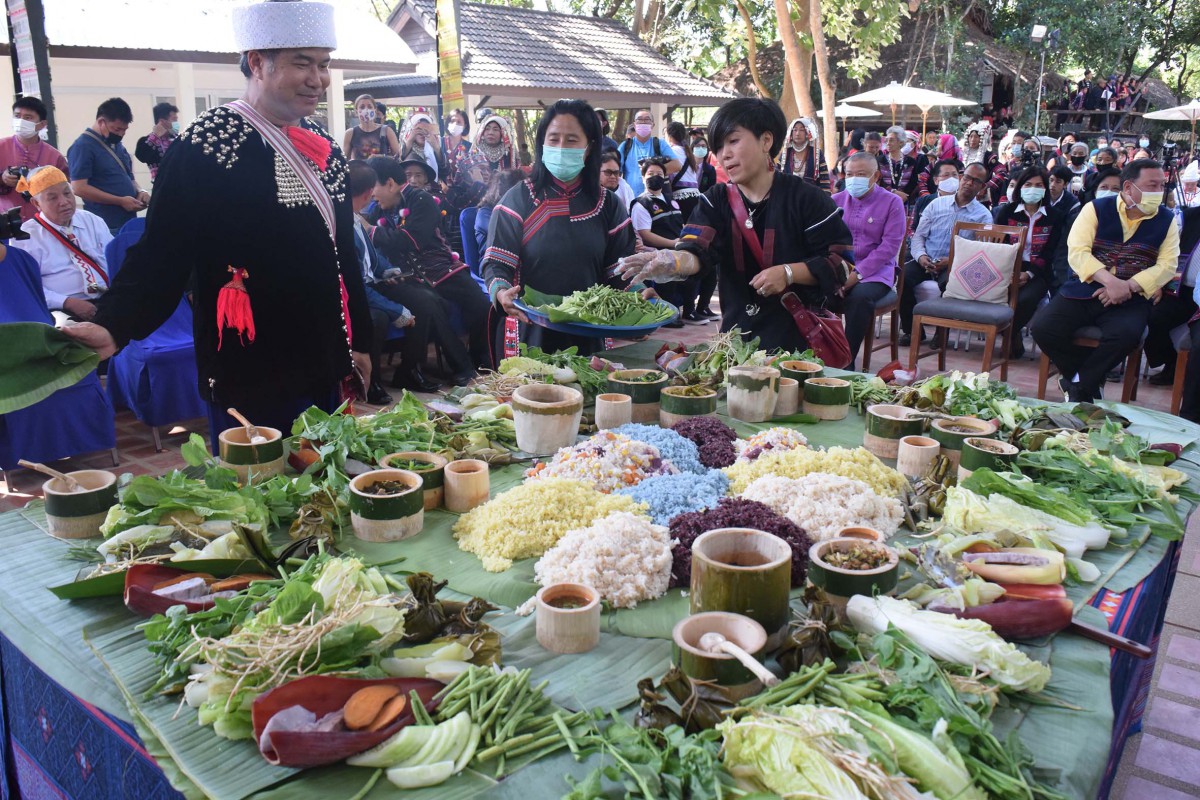
According to Suphot Lija of the Ethnic Community Health Promotion Association (NSO) tribal culture is rooted in agriculture since it is the source of both culture and belief. It was performed when tribesmen planted rice and vegetables and before sharing or eating they conducted this ceremony. The purpose of the ceremony is to express the clanis gratitude. While tribes have different rituals their destinations and points of contact are similar (Northpublicnews 2020).
After harvesting rice in November and December the Lisu tribe consumes new rice as part of their tradition. Depending on the convenience of each area any vegetables available will be exchanged. Lisu gives their first bite of rice to their pet dogs as their first meal from the harvest. It is said that in the past rice was not available to the Lisu people. Lisu lives on the other side of the river from where food is available. Still Li Su found it difficult to cross over to get rice seed. The water is deep and swift so when a dog was able to cross the shore it laid and rolled on the dried paddy that the villagers had prepared. As the rice grain sticks to the hair it floats along with the stream when it swims back. There were only three seeds remaining attached to the tail so Lisu used them to cultivate and propagate the rice we eat today. (Northpublic news 2020)
Source : www.northpublicnews.com
Tradition
- Lisu New Year (19895)
- Para Long Mueng Poy Lern Sib ed Ok Wah Lu Chong Kheng Tang Pud or Chong Para (19678)
- Kinwa KhaoJawe and Lahu New Year Festivals (19662)
- Chinese New Year (19525)
- Poy Sang Long (19504)
- Poy Pee Mai Tai (19471)
- Poy Khao Wa (Buddha Lent) (19455)
- Poy Ja Ka (19399)
- Traditional New Rice Culture (19330)
- Poy Hang Nam (19298)