Doi Paek Saem Royal Project
Update 24 August 2023
Visitors 19357 Category Tourist Attraction
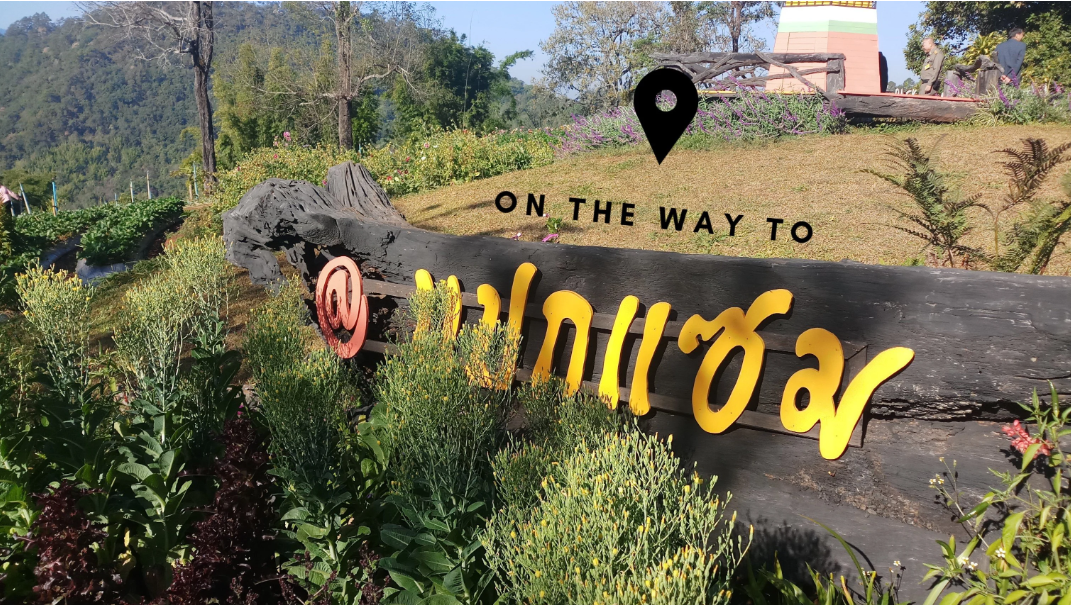
The Doi Paek Saem Royal Project, or the Baek Saem Agricultural, Forestry, and Environmental Demonstration and Technology Transfer Station under the Royal Initiative, is located in Village No. 6, Piang Luang Subdistrict, Wiang Haeng District, Chiang Mai Province. Situated at an elevation of approximately 1,300 meters above mean sea level, it is a steep mountainous area with important water sources, namely Huai Hok Luang, Huai Na Yao, and Huai Na On. Located about 700 meters from the national border, the station serves as a center for demonstrating and transferring agricultural, forestry, and environmental technologies to local residents working at the station.
Background of the Baek Saem Demonstration Station: On February 6, 2000, Her Majesty Queen Sirikit, accompanied by Crown Prince Maha Vajiralongkorn, visited the residents of Ban Baek Saem, Piang Luang Subdistrict, Wiang Haeng District, Chiang Mai Province. They also inspected the Man-Alu (cassava/root crop) orchard located about 2 kilometers west of Ban Baek Saem. It was observed that both areas are vital watershed sources—namely Huai Hok Luang, Huai Na Yao, and Huai Na On—which flow into the Mae Taeng River. The forest areas had been encroached upon and cleared for Man-Alu cultivation, taro fields, and lychee orchards, with a growing trend of further clearance driven by population growth in surrounding villages, namely Ban Baek Saem, Ban Hin Tae, Ban Lak Taeng, and Ban Piang Luang. Furthermore, these border villages are vulnerable to drug-related problems and the impacts of neighboring countries border management policies, posing threats to national security.
Consequently, Her Majesty issued a royal command to establish the Agricultural, Forestry, and Environmental Demonstration and Technology Transfer Station. The objectives are to develop the villages and improve the livelihood of the local people, as well as to conserve and restore the forest to its original, lush condition so that it can sustainably serve as a water source for local consumption and agriculture.
In summary, the key points of the royal command are: 1. Agricultural Development: To use the Agricultural, Forestry, and Environmental Demonstration and Technology Transfer Station as a hub for transferring agricultural technology to residents working at the station. Once acquired, this knowledge can be applied to develop their own communities, focusing on practical implementation in their personal farmlands. 2. Water Resource and Forest Conservation: To develop water sources, alongside conserving and restoring forest conditions, to ensure an adequate water supply for daily consumption and agricultural use.
Image Source: https://travel.trueid.net/detail/2Ayqq1Za0w5A
Map
Temples
- Lisu New Year (19888)
- Wat Fa Wiang Inn (19712)
- Para Long Mueng Poy Lern Sib ed Ok Wah Lu Chong Kheng Tang Pud or Chong Para (19673)
- Kinwa KhaoJawe and Lahu New Year Festivals (19656)
- Chinese New Year (19519)
- Poy Sang Long (19499)
- Poy Pee Mai Tai (19465)
- Poy Khao Wa (Buddha Lent) (19449)
- Wat Huai Krai or Huai Krai Temple (19420)
- Poy Ja Ka (19393)